
Canva and SaaS Are Dead. This Is ACTUAL Capitalism.
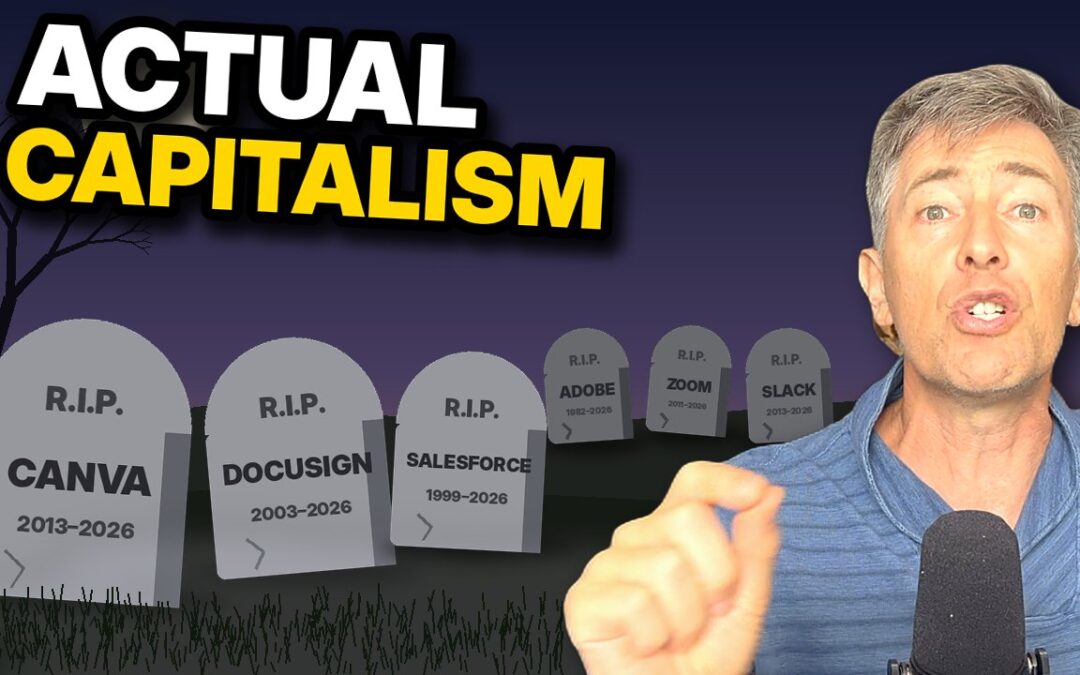
“I canceled Canva and I am never coming back — thumbnails, posters, even my kids’ birthday invitations. Multiply me by a few million people who discovered the same thing, and you start to understand why the free-to-paid conversion math that built these companies is quietly breaking.”
I canceled Canva and I am never coming back. Not “downgraded.” Canceled. Thumbnails, posters, my kids’ birthday invitations—Claude does them faster, remembers the style, and doesn’t charge me another twelve bucks a month for the privilege of dragging rectangles around.
That revenue is for what I considered an awesome service, that 6 months ago I would have never dreamed of giving up, well, it’s turning into a nightmare not only for them, but other software as a service companies.
Canva can put all the Magic Studio buttons and Brand Kits it wants on the site; I am not reopening the tab. Multiply me by a few million other people who discovered the same thing in the last eighteen months and you start to understand why the free-to-paid conversion math that built these companies is quietly breaking.
Same story with DocuSign. There are already multiple free or near-free open-source versions. Self-host it, run the lighter cloud tiers, or just use whatever the next agent throws at you. The core job—get a signature on a PDF without mailing it—was never that hard. The company charged a premium for convenience, templates, and “enterprise readiness.” Convenience is now a prompt. The premium is being competed away.
And the stocks? They’ve dipped. They’ve had their bad days when some new model dropped that can build slides or draft contracts. But the market is still treating this like a feature upgrade cycle, not a structural attack on the profit pool. These companies are not going to zero. Some of what they own is genuinely durable: the actual customer records, the permission systems, the audit trails, the compliance scaffolding, the messy decade of custom workflows that a random open model cannot simply invent on Tuesday. Large organizations will still pay someone to be the system of record and the place where the agent is allowed to write without burning the company down. That layer survives.
Everything else is getting eaten. The pure seat licenses. The “we give you a nice UI so a human can click through the process.” The design templates that were the product. The e-signature convenience tax. The thin automation that used to justify the enterprise edition. Once an agent can do the work of ten people and the output is good enough, the company does not need ten seats.
It needs one system that holds the data and the rules, and it will pay a lot less for it than it paid when every human required their own login. The rest—the stuff that was basically packaging around a relatively simple digital task—gets competed down to free or nearly free inside a Claude or ChatGPT subscription.
This is not some government-sponsored mode where regulators write rules that freeze the old incumbents in place and then carefully license a handful of approved competitors. No one handed Claude a charter or required Canva and DocuSign to leave a permanent moat. This is the actual free market: a new technology shows up, anyone can use it, the old high-margin way of doing the same job suddenly looks like a tollbooth, and customers walk.
Creative destruction does not ask permission and it does not care that you spent a decade building the previous convenience layer. It just makes the previous profit center optional.
This is ACTUA capitalism, where the interests of competing parties, away at the profit centers that were generated in years past, giving you, the consumer, more, for less, as we advanced the human species. That should be good news, maybe not for Canva, and salesforce, but for everyone else.
Connect with us
Popular posts

They Jailed Russell Brand. Now They’re Coming for His Wife
“They locked up the voice. Now they want to drown out the echo with threats. Think about how terrified you have to be of a man to do that — he’s behind bars, no microphone, no show — and they still can’t stand hearing him say ‘I’m innocent.'”

RFK Says “Get the MMR.” The View Says Impeach Him.
“They want to fire the guy telling you to get the vaccine, for not getting you vaccinated. That’s like blaming the lifeguard for the drowning because he only yelled ‘swim’ four hundred times.”
They Want Elon Behind Bars – Show Me the Man, I’ll Show You the Crime
“When justice works backwards from a name instead of forward from an act, it isn’t justice — it’s a hit list with a gavel. If they can do it to the richest man on Earth, what do you think they’ll do to you?”

Fast Food + Pharma Propagandists Harpies on The View Rail for RFK Jr to Be Impeached
Do they even know that they are shills for Big Pharma and fast food? Witting or unwitting propagandists. Leave your thoughts below. Watch Whoopi Goldb…
Featured post

Google Declares itself Evil as YouTube SABOTAGES Competition
Google is no longer do no evil company but one that is actively installing an Orwellian nightmare dystopia upon our society and the world.
Latest posts
They Jailed Russell Brand. Now They’re Coming for His Wife
“They locked up the voice. Now they want to drown out the echo with threats. Think about how terrified you have to be of a man to do that — he’s behind bars, no microphone, no show — and they still can’t stand hearing him say ‘I’m innocent.'”
RFK Says “Get the MMR.” The View Says Impeach Him.
“They want to fire the guy telling you to get the vaccine, for not getting you vaccinated. That’s like blaming the lifeguard for the drowning because he only yelled ‘swim’ four hundred times.”
They Want Elon Behind Bars – Show Me the Man, I’ll Show You the Crime
“When justice works backwards from a name instead of forward from an act, it isn’t justice — it’s a hit list with a gavel. If they can do it to the richest man on Earth, what do you think they’ll do to you?”
Fast Food + Pharma Propagandists Harpies on The View Rail for RFK Jr to Be Impeached
Do they even know that they are shills for Big Pharma and fast food? Witting or unwitting propagandists. Leave your thoughts below. Watch Whoopi Goldb…

0 Comments