
Racism or Culture? BOTH Are Wrong
“The idea that any group can be dropped into any other society and produce identical average outcomes is a delusion maintained less by evidence than by the desire to avoid a particular accusation. The accusation will arrive anyway.”
The West is racist. That’s been the official left-wing operating system for decades. How else do you explain the stubborn gaps in income, crime, educational attainment, and every other measurable outcome? In their cosmology every group and every culture is interchangeable. Therefore the only remaining variable is discrimination.
The mainstream right’s rebuttal has been equally elegant: culture did it. Some groups, for reasons that remain mysterious, simply adopted self-sabotaging cultures while others lucked into good ones. Culture is the prime mover. Any population could, in theory, download any other population’s culture and match its results. Assimilation is always just a matter of will and time.
Both stories are stupid. Discrimination is not the only factor. Culture obviously matters. But a people’s culture is not a random download. It is the product of the people who invent it, enforce it, and transmit it. There is a more parsimonious explanation sitting in plain sight: groups differ, on average, in traits that are partly heritable. Those differences produce different average outcomes even when external conditions are identical. The reason we are not allowed to say this out loud is that racial egalitarianism—the claim that all groups are fundamentally the same in every trait that matters—has been elevated to sacred status. Everything else is downstream of that dogma. In fact, if I stated this in 2021, I would be burned at the stake.
What follows is a tier list of the standard arguments offered in its defense. We are talking about group averages. Exceptional individuals exist in every population. They are, by definition, exceptional. If you only treat groups as collectives when it is convenient and then scream “racism” the moment anyone else does the same, you already know the exit.
Intelligence is not genetic.
This claim is required scaffolding for anyone who wants every disparity to be socioeconomic. Twin and adoption studies have shown for decades that intelligence is substantially heritable. Evolution is not optional; selection on cognitive ability is how humans got brains in the first place. Different populations have lived under different selective regimes for tens of thousands of years. The idea that this left zero average difference is special pleading.
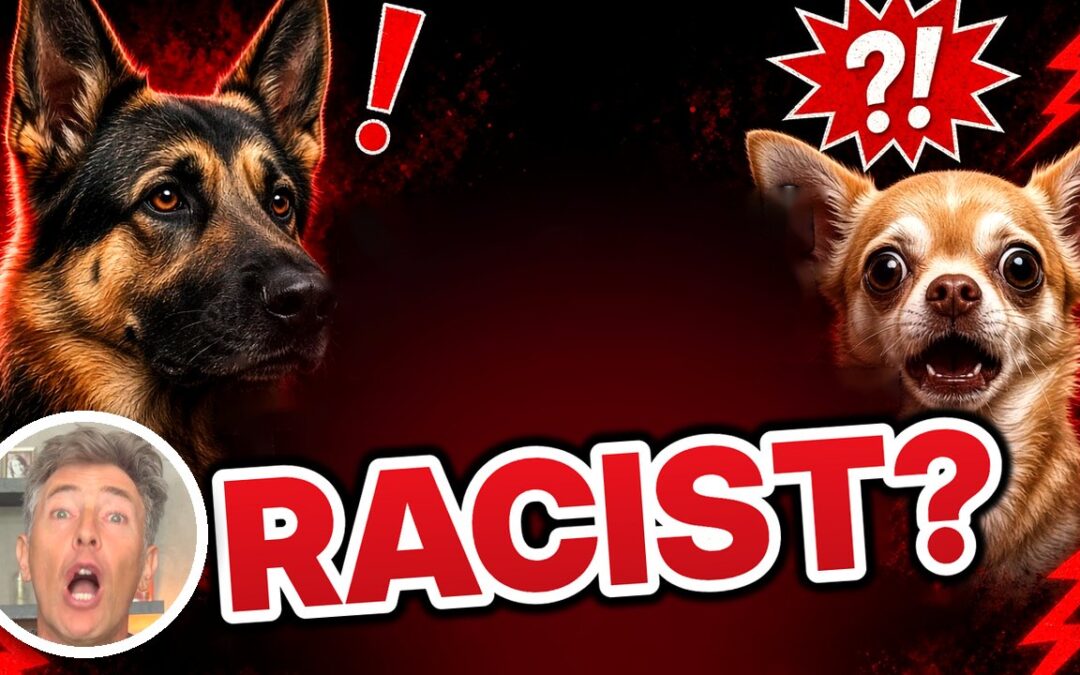
German Shepherds and chihuahuas are the same species- canine. One is systematically better at learning complex tasks. Nobody attributes this to anti-chihuahua bias or unequal access to herding seminars. The same logic applies to people. Uh oh, now we get to MPC tier—mandatory progressive cope.
Humans are 99.9 percent identical.
You share roughly half your genes with a banana and the large majority of your sequence with a cat. Quantitative similarity is not qualitative identity. That remaining fraction is where the action is. Tigers and domestic cats are also ~99.9 percent identical and diverged far more recently than some human populations. Nobody suggests taking a tiger to Starbucks and then blaming the resulting chaos on socioeconomic factors. Aggression, impulse control, and personality traits are heritable too.
Truth hurts, doesn’t it?
There is more genetic variation within groups than between them.
True as a statistical statement about total variance. Irrelevant as an argument. Most of that within-group noise is neutral or near-neutral. A handful of loci can still be highly differentiated and functionally important. The Duffy-negative allele is near-fixed across large parts of West and Central Africa; it confers resistance to Plasmodium vivax aka a type of malaria. It is rare outside African ancestry but not literally zero. Tibetans carry an EPAS1 variant at high frequency that improves survival at altitudes where oxygen is ~40 percent lower; the same variant is essentially absent in Africans and Europeans. The ABCC11 variant associated with dry earwax and reduced body odor is common across East Asia and present at appreciable rates in other Asian and Native American populations; it is rare in Europeans and sub-Saharan Africans. These are not random noise. When the trait is polygenic (intelligence, time preference, personality), we have not isolated every causal variant, but the behavioral genetics evidence that the traits themselves are heritable is overwhelming. Social coordination depends far more on average cognitive and temperamental similarity than on earwax consistency.
Race is a social construct.
Whenever someone announces that X is a social construct, the translation is usually “I have no empirical counter and would like to change the subject.” Every concept humans use is socially mediated; that does not make the underlying phenomenon optional. We named the sun. The sun still exists. Racial categories track ancestry clusters that are recoverable from genetics with high accuracy. The categories are imperfect, fuzzy at the edges, and historically contingent in their labels. They are not imaginary.
IQ tests are unreliable / culturally biased.
The world IQ map has been an inconvenience for decades. The usual responses are that IQ is not meaningfully genetic (false) or that the tests have flaws (true but incomplete). IQ remains the single best predictor of educational and occupational outcomes we possess, outperforming parental income. If the objection is that it mainly predicts success inside Western institutions, that is still a practical problem: groups with lower average scores will, on average, have worse outcomes inside those institutions even in the absence of discrimination. There is no known large-scale society in which higher cognitive ability is a disadvantage. Importing lower-scoring populations into higher-scoring ones and then acting surprised at the resulting gaps is not a policy; it is a preference for narrative over data.
Culture fully explains the disparities.
This is the respectable right-wing exit ramp: concede that discrimination is not the whole story, refuse to mention genes, and hope the racism accusation stays mild. It does not. The question is why certain populations generate and sustain certain cultural patterns more readily than others. Genes and culture interact. Genetic differences affect which cultural variants are easy to adopt or invent; culture then exerts further selection. Genes are prior. A cultural package that works for one population does not automatically transfer. Expecting identical results after moving people between radically different historical environments is blank-slate ideology. It survives mainly because contradicting it risks social punishment. Abyss tier.
Different populations are different because they adapted to different environments over long periods. The belief that any group can be dropped into any other society and will, after a suitable adjustment period, produce identical average outcomes is a delusion. It is maintained less by evidence than by the desire to avoid a particular accusation. The accusation will arrive anyway.
Connect with us
Popular posts

We Celebrate Suicide Bombers” — The Mom Whose Boy Israel SAVED
Israeli doctors saved her baby’s life. An Israeli father whose soldier son was killed by Palestinians paid for it. Then she told the camera she hopes …

Ministry of Truth, Inc.: How Your Tax Dollars Defunded the News
Ah yes, the Ministry of Truth, but make it a nonprofit with a Dynamic Exclusion List and a PowerPoint.Breitbart
The Global Disinformation Index (GDI)…

Racism or Culture? BOTH Are Wrong
“A pro-Palestine activist tries to explain Israel to a Black Israeli Bedouin man who actually *lives there* — and the conversation gets complicated fast.”

Douglas Murray’s Best Moments — Saying What Everyone Else Is Too Scared To
“Name me one Islamist state you’d want to live in” — Murray’s sharpest debates broken down, fact-checked against primary sources, and stripped of the double standards the room pretends not to notice.
Featured post

Google Declares itself Evil as YouTube SABOTAGES Competition
Google is no longer do no evil company but one that is actively installing an Orwellian nightmare dystopia upon our society and the world.
Latest posts
We Celebrate Suicide Bombers” — The Mom Whose Boy Israel SAVED
Israeli doctors saved her baby’s life. An Israeli father whose soldier son was killed by Palestinians paid for it. Then she told the camera she hopes …
Ministry of Truth, Inc.: How Your Tax Dollars Defunded the News
Ah yes, the Ministry of Truth, but make it a nonprofit with a Dynamic Exclusion List and a PowerPoint.Breitbart
The Global Disinformation Index (GDI)…
Racism or Culture? BOTH Are Wrong
“A pro-Palestine activist tries to explain Israel to a Black Israeli Bedouin man who actually *lives there* — and the conversation gets complicated fast.”
Douglas Murray’s Best Moments — Saying What Everyone Else Is Too Scared To
“Name me one Islamist state you’d want to live in” — Murray’s sharpest debates broken down, fact-checked against primary sources, and stripped of the double standards the room pretends not to notice.

0 Comments