
I Escaped Death in Stalin’s Russia – My Shocking WWII Survival Story
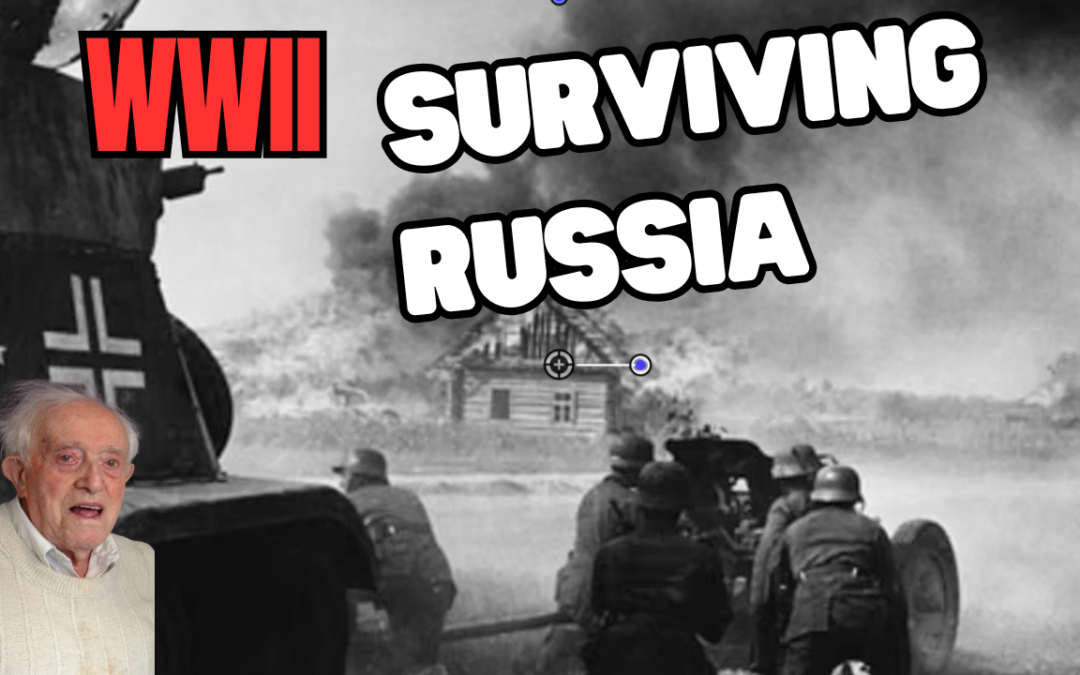
“The doctor said she had a serious heart problem and might die in three months — but the real diagnosis would prove far more surprising, revealing a truth that would change everything as they prepared to leave the Soviet Union forever.”
It was already May 1942 and I had finished my studies at the institute. It was time for me to enlist in the army. It was a very hard time because I had to leave Helena alone. But during the three years since we left Poland she had developed quite well. She already spoke Russian and found it very easy to make friends. I hoped she would be able to manage by herself. She still had two years of studies ahead. Whatever happened to me in the army, she would be able to help herself to some degree.I didn’t know at that time how the war was progressing. It wasn’t going especially well and the Germans had started new attacks. There was a lot of talk about the need for a second front, but Churchill was more interested in preserving the British Empire and first wanted to free the African part from the German army.The United States was not yet properly prepared for a second front. There was only small help through the Lend-Lease program.I finally had to enlist. Some time later, together with my friend who had come with us from Dubovka, I went to the same officer camp not far from Saratov to the west. The camp was for preparing officers. I participated in the exercises for about a month.
But one day I suddenly didn’t feel well and got very swollen. I was taken to the hospital. They even asked me whether I was taking salt on purpose. I said I didn’t like salt very much. Probably because I was sleeping almost outdoors in the camp my kidneys got inflamed. The hospital decided I could not go back to the army and that I had chronic inflammation of the kidneys.When they let me out they assigned me to a working battalion of the army supporting civil works. Many were assigned manual jobs. I was assigned to Saratov University to work in a chemical lab. It was a break between semesters and there wasn’t much work or many chemicals. We did what we could.I got frustrated because I didn’t want to stay inactive. From time to time generals came to inspect the battalion and ask if we had complaints. When I went to the army I had kept my university student ID with me (I should have left it but luckily I didn’t). During one inspection I went to a general and complained. I showed him the ID and said I would like to go back to the university in Molotov because there wasn’t much work for me here. Somehow he agreed and gave me permission to leave the battalion and go back to Molotov. But it was already very late in the year.
I managed to get a place on a boat going up the Volga. Again the situation was dire regarding fuel. It took more than a month, with many stops to cut trees for fuel. When I finally got to Molotov it was almost winter.When I arrived at the university I was already feeling very bad — losing a lot of blood. The university was almost empty because it was a break. Luckily a professor I knew came out and told me where Helena lived. She had gone to collect potatoes.
He got the key and let me in. I fell on the floor and stayed unconscious for a long time. Luckily Helena came back, found me, and took me to the hospital. I woke up there a few days later.The hospital was full — they had brought many people from Leningrad who were emaciated by hunger, and also soldiers who had drunk methanol and were swollen. The doctors cared for them quite well. I stayed in the hospital I don’t know how long —
when I got out it was already deep winter.When I got out a new problem started that I hadn’t realized before. When I left for the army I had to leave my internal passport at the office. When I came back I went to recover it. At the same time, the Polish army under General Anders had left Russia for the West. In retaliation the Soviet government decided that any person who had lived in Poland before the war could not get a normal passport but one that did not allow living in large cities. They also wanted to take away Helena’s passport and not let her finish her studies.This would have been a catastrophe. Luckily during our stay we had become friends with a professor of Social and Political Sciences. I told him what happened. He said he would try to help. After some time he came back and told me to come with him to the KGB to see the head and explain our case.We made an appointment and went with the professor to the head of the KGB. It so happened that the head had a Polish name. I assumed he was a son or grandson of Polish people expelled to Siberia because of the uprisings. After some talk and thinking he decided to restore our normal passports so we could live in large towns. But as long as Helena was still studying I should go to work as an agronomist in one of the places he indicated. I don’t remember the name now.I decided this was a quite good solution. In the meantime, while waiting, I worked for a short while at a seed-breeding station not far from Molotov. When the passport came I had to go to the sovkhoz indicated by him and work there as an agronomist. It was probably the autumn of 1943 when I started.At the beginning it was quite hard work because I didn’t know the routine, but finally I got used to it and managed to do my work quite well. I also had to do quite a lot of hours. There were various people — some friendly, some not. It was quite a challenge.
During that time I also had to learn to ride a horse, which I had never done before. I wasn’t always very good at it but finally I learned because I had to go to another place associated with the sovkhoz a few miles away — either on foot or on horseback.I worked there from the middle of autumn 1943 until probably the autumn or winter of 1944, when Helena finished her studies.One day early in spring 1944 someone told Helena I was sick. She decided to come to see me at the sovkhoz. Of course there was no communication and I didn’t know she was coming. Suddenly she arrived. She said she had been told I was sick. She stayed a few days but then had to leave. This time she was taken with care because the road was very slippery and full of water from melting snow. She wasn’t prepared for that and it was hard for her. I felt sorry that someone had told her such a story which wasn’t true.When Helena finished her studies she had to leave the university dormitory so she rented a place at an old lady teacher’s house. There was also one other renter there.As I said before, she became very friendly with various people related to the university, including people sent from Moscow from the Ministry of Agriculture. Among them was the head of the educational part of the ministry and his wife. They suggested that when she finished she could come to Moscow and continue her studies for a PhD, and he promised to help with the arrangements.Of course it wasn’t easy — she had to pass exams. We both applied. She went first because she applied for the plant physiology department headed by a very old professor who had studied in Germany before World War I. He was a decorated member of the Academy of Sciences. She met him and passed the exams quite easily and was accepted.I went for my exams later because I had to finish work at the sovkhoz first. I came by train and stayed with the family we had befriended for a few days until I passed the exams and waited for the decision.Suddenly, during the exams, a lady (I don’t know her relation to the department) came and told the professor — who was also a member of the academy and had been recently decorated — that I had worked at a seed-breeding station for a short time and they were not very satisfied with that. He put away the acceptance letter and didn’t sign it because he went on vacation. But after some time his secretary — an older lady who had worked there a long time and knew his habits — decided by herself that he was not doing the right thing. She signed the letter for him and sent it to me. So finally we were both accepted.Before I was accepted we stayed with Helena at the house of the old retired lady teacher. She was a very nice person. One night we heard crying. The next day the other renter told us that she had three sons in the war. She had received a letter that her last son had been killed (the other two had already been killed before). She was now left alone and suffered terribly. We tried to make her life a bit easier but we soon had to leave.Sometime in the autumn of 1945 everything was settled and we left for Moscow to continue our studies. This was already after the war and we started thinking about our relatives and parents and how to get in touch with them. From Perm we couldn’t do much, but in Moscow it became easier. We contacted two sources: the Union of Polish Patriots in Moscow and the Commission for Refugees. You could put down letters for everyone to see in various refugee camps to find out what happened to your family.It so happened that one of my high school friends (now a lady) came back to find out about her family. She saw my name and started looking for information about my family too. After some time we got a letter from her with addresses of my sisters. I was very happy that my sisters had survived, but it was very sad that neither of my parents, nor my youngest brother, nor my youngest cousin had survived.Later I learned how much my eldest sister (who was a year and a half younger than me) had helped my younger sister and youngest brother to survive. My younger sister somehow survived, but my brother got typhus and died shortly before the end of the war.Helena’s parents, brother and sister did not survive, but two aunts did, and one aunt had a girl. One aunt lived in Polotsk and the other in her old house in Inguria near Poland. Of course we immediately wrote to my sisters and to her aunts telling them about us. We were not in close contact for a long time after that but from time to time we got news from them and sent them news from us.The studies lasted three years. During that time we befriended many people, especially from the Union of Polish Patriots and one lady who had married a Russian man in Moscow. The Russian man was not very healthy and had trouble with his family. He was in the late stages of tuberculosis, which finally took his life. Before his death, probably in our second year or beginning of the third, Helena invited them to our room in the dormitory although it wasn’t large. They stayed with us for quite a time but he was mostly in bed. Then they had to go back because they couldn’t stay with us all the time.During the studies I organized an experimental field in one of the kolkhozes close to Moscow. I went back to my research, bringing samples to the lab and doing various investigations in the field and in the lab. The lab was headed by a Russian lady with whom we became very friendly. She was nice and helpful, but it was a hard time and we always had trouble with chemicals and apparatus. Somehow we managed to do the work.In the third year of studies, sometime in the early spring or autumn of 1947 or 1948, a delegation of Polish professors came to visit. I talked with them, especially with the one who headed the Institute of Plant Breeding and Seed Production. I told her that after I finished I had no intention of coming back to Poland. She said she would be waiting for me and had a position for me. I didn’t know if it was just talk or reality, but I accepted it as a good omen.We continued our studies. In 1948 suddenly Helena told me she was not feeling well and didn’t know what it was. She went to the doctor and came back very unhappy. The doctor said she had a serious heart problem and might die in three months. She decided that if she had only three months she would not finish her thesis because it would be too much effort.I had a very hard time convincing her that I didn’t believe she was that sick and that she should finish her thesis anyway. After long talks for many days she finally decided to go back to writing the thesis. I was also writing mine and helped her, being very careful that she did it well.In the meantime we applied to the embassy for entry visas to Poland, for restoring our citizenship, and for repatriation. Sometime in May we defended our theses. It was quite a difficult task, at least for me. Helena had fewer questions. We both defended successfully and were given the title that the Timiryazev Academy was giving at that time.We also got the repatriation papers and were assigned a day to leave. We didn’t get our diplomas yet but got excerpts and decided to go back to Poland with the excerpts and try to get the diplomas later.Another story developed. Sometime very shortly — three or four days — before we were leaving, Helena told me that her passport had expired and she had forgotten to extend it. It was almost time to leave. I went to the authorities in Moscow to have it extended but they decided not to extend it and took it away.I was in trouble and had to go to the Polish embassy to retrieve the passport and get it extended. It took more than two days but the embassy managed to retrieve it with an extension.Finally the day came when we had to leave. At the beginning everything went right and we took a train from Moscow to Warsaw. Of course the train had to change because the railroad gauge in Poland was European and in the Soviet Union it was wider. On the way to Poland we came to Minsk and I had to go out to buy something to eat or drink. While walking through the lines I fell and hit my nose, lips and eyes. I was in terrible shape, bleeding quite a lot. I got some help at the station but arrived in Poland in very bad shape, heavily bandaged.I didn’t mention earlier that before we left we found out Helena was pregnant. That was why she was sick, not because of heart failure.We had been married in 1939 in Poland but we didn’t believe any documents remained, so we also got a second marriage certificate in Moscow. This showed we were married in 1948 while actually we had been married in 1939.So now we were back in Poland and there would be a new chapter in our life. We didn’t know what to expect but we were glad we were out of the Soviet Union and back on old territory which was both known and unknown to us — known as it was before the war and unknown as it was after the war.For the first days we went from Warsaw to Grudziądz because we didn’t have any place in Warsaw yet and I didn’t want to start asking around while I was bandaged and wanted to rest a bit. We also informed our friends that we had returned. I had seen three of them who had come back to Poland before us. One was the lady from the Soviet Union, and another was a friend from the university in Poland who had come back from England where he served in the English army. He came back with an English wife from a grand family of dukes and princes. His former girlfriend was also back and lived in one of the apartments in Poland. She was alone at that time but had been married and had a child.We went to reach one of Helena’s aunts. At that time she was married to a former soldier who had come back from the army and settled in Grudziądz. He worked somewhere in Warsaw. He was a very pleasant and likable person. They both were likable but they had a child with Down syndrome which made life very difficult. She cared for the girl very much and the girl survived quite a long time.After a few days I ventured out to the lady who was the director of the institute I had told you about — the one who visited our department in Moscow. She immediately offered me work as an agronomist. I accepted but I had to have acceptance from the Ministry of Agriculture. I went to the ministry and talked to one of the deputy ministers. He suggested that before starting work I should change our names. So I went back to Grudziądz and we changed our names there.Then after some time I went back to Warsaw (Helena was still in Grudziądz) to ask for a place to stay. They arranged a small place for us in one of the houses in midtown on Poznańska Street. We moved to this place as long as our son wasn’t born. We started working and the place was quite satisfactory but it was too small once we had to start a family. I was promised a larger apartment later because one was being built and we had to wait until it was finished.
At the same time when Helena came back to Warsaw she met our friend from Moscow who worked in a publishing house. She arranged contact for me to translate a book of my professor from Russian to Polish and some work for Helena as an editor for the time being. So we both started working and living in this place.
Connect with us
Popular posts

Laundering Leftist Violence for … ONE AIM
“During the 2020 ‘Summer of Love,’ $1-2 billion in damages, 2,000+ injured officers, and dozens dead were quietly erased from extremism tallies — while prison gang stabbings counted as urgent right-wing threats. Find out how the data gets cooked.”

Elon Musk Is a Trillionaire and Your Tears Are Delicious
“While socialists tweet from their iPhones about ‘fairness,’ Elon Musk is building rockets and closing in on a trillion-dollar net worth. We break down the jealousy, the bad math, and why his wealth isn’t anyone else’s problem.”

Karmelo Verdict Was the Breaking Point for American Unity (as Intended)
“What unified America used to look like was a pickup basketball game — Black, White, Asian, or Martian, the only scorecard that mattered was merit. Now we’ve traded team ball for participation-trophy tribal warfare, and someone’s profiting from the division.”

Naziism + Communism Merged Together in Graham Platner (Blue POISON)
The Democrats have nominated Graham Platner as their Senate candidate for Maine, a combination, effusion of the worst ideologies of the 20th century, …
Featured post

Google Declares itself Evil as YouTube SABOTAGES Competition
Google is no longer do no evil company but one that is actively installing an Orwellian nightmare dystopia upon our society and the world.
Latest posts
Laundering Leftist Violence for … ONE AIM
“During the 2020 ‘Summer of Love,’ $1-2 billion in damages, 2,000+ injured officers, and dozens dead were quietly erased from extremism tallies — while prison gang stabbings counted as urgent right-wing threats. Find out how the data gets cooked.”
Elon Musk Is a Trillionaire and Your Tears Are Delicious
“While socialists tweet from their iPhones about ‘fairness,’ Elon Musk is building rockets and closing in on a trillion-dollar net worth. We break down the jealousy, the bad math, and why his wealth isn’t anyone else’s problem.”
Karmelo Verdict Was the Breaking Point for American Unity (as Intended)
“What unified America used to look like was a pickup basketball game — Black, White, Asian, or Martian, the only scorecard that mattered was merit. Now we’ve traded team ball for participation-trophy tribal warfare, and someone’s profiting from the division.”
Naziism + Communism Merged Together in Graham Platner (Blue POISON)
The Democrats have nominated Graham Platner as their Senate candidate for Maine, a combination, effusion of the worst ideologies of the 20th century, …

0 Comments